
 EN
EN
Why Static Slotting Fails in High-Volume Ecommerce Warehouses
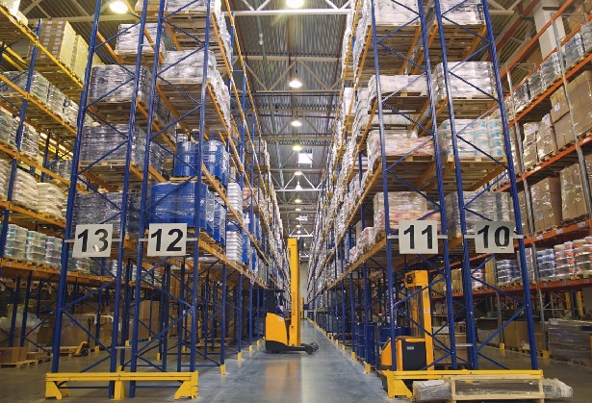
The velocity bottleneck: How order surges expose inflexible SKU placement
Fixed SKU locations collapse under e-commerce order spikes, creating three critical bottlenecks:
- Travel time inflation: Pickers walk 60% farther during surges when fast-movers aren't repositioned (DC Velocity 2023)
- Congestion hotspots: 35% of warehouse labor hours are lost to aisle crowding during peak cycles
- Replenishment delays: Static slotting forces twice as many restocking trips for high-velocity items
Labor already consumes 55% of warehouse operating costs—making these inefficiencies financially unsustainable. Warehouse slotting optimization must replace rigid layouts with demand-responsive systems.
Limitations of traditional ABC analysis in dynamic demand environments
Legacy ABC classification fails modern fulfillment because it's too slow and oversimplified:
| Traditional Approach | E-commerce Reality |
|---|---|
| Quarterly SKU ranking updates | Daily velocity shifts during promotions |
| Volume-based categorization | Volatility-driven placement needs |
| Isolated fast-mover zones | Affinity-based clustering requirements |
The problem with ABC systems lies in their refresh cycles that happen too rarely to catch those sudden flash sales or products going viral overnight. According to a report from last year, around two thirds of warehouses still using only ABC methods ended up missing out on seasonal buying patterns. This oversight actually caused their workers to walk about 22% further when picking items off shelves. These days, integrating real-time warehouse management system data isn't just helpful anymore; it's practically necessary if companies want their inventory placement decisions based on what people are actually buying right now instead of old numbers from months ago.
Core Principles of Warehouse Slotting Optimization
Velocity-based placement: Prioritizing pick frequency, distance, and demand volatility
Strategically positioning items based on movement patterns is foundational. High-velocity SKUs should occupy zones near packing stations to minimize travel time—a 2025 industry study confirms A-items (top 20% by pick frequency) drive 80% of fulfillment activity. Effective velocity-based placement requires analyzing:
- Pick frequency relative to travel distance
- Demand volatility (e.g., coefficient of variation over time)
- Seasonal correlation with SKU movement trends
Integrating ABC classification with real-time demand forecasting reduces picker travel by 27% on average, according to logistics benchmarks.
Physical constraints integration: Cube, weight, and unit-level (item/case/pallet) compatibility
Ignoring dimensional realities undermines even the most statistically sound slotting plan. Effective slotting balances three physical dimensions:
- Cube utilization: Vertical storage can increase capacity 30–40% without expanding footprint
- Weight distribution: Heavier items belong in lower, more accessible slots to accelerate retrieval and reduce injury risk
- Unit-handling alignment: Separating each-pick, case-pick, and pallet-pick zones prevents workflow conflict and MHE congestion
Research on cubic space optimization demonstrates 22% faster pallet processing when slotting accounts for dimensional weight profiles.
Enabling Real-Time and Predictive Warehouse Slotting Optimization
From weekly to hourly re-slotting: WMS-triggered dynamic adjustments
Traditional weekly slotting cycles are obsolete in high-velocity ecommerce. Modern warehouse slotting optimization leverages live WMS data streams to adjust placements hourly—not just during scheduled reviews. When order velocity shifts or new SKUs launch, algorithms instantly recalculate optimal locations using:
- Real-time pick frequency and dwell-time metrics
- Zone-level congestion heatmaps
- Resource availability (e.g., labor shifts, MHE status, staging capacity)
A 2023 Logistics Tech Study showed facilities using WMS-driven re-slotting reduced picker travel time by 45% versus static models—without adding labor or infrastructure.
SKU affinity and predictive co-location: Leveraging correlation and forecasting for intelligent grouping
Machine learning analyzes historical order data to identify product affinities (e.g., phone cases with chargers, coffee pods with brewers). Predictive models then proactively co-locate high-correlation SKUs in adjacent slots—before demand surges occur. This approach:
- Cuts pick-path distance by 20% for multi-item orders (Warehousing Efficiency Report 2024)
- Anticipates seasonal shifts using integrated sales forecasting
- Balances workflow by distributing high-velocity clusters across zones—not concentrating them in one "hot zone"
The result is a self-optimizing warehouse ecosystem where placement evolves with purchasing behavior—not against it.
Measurable Business Impact of Warehouse Slotting Optimization
The benefits just keep adding up really. When companies get their inventory placement right, they cut down on storage expenses, speed things along through faster cycles, and deliver products when promised which builds real trust with customers over time. Looking at return on investment numbers, most businesses see somewhere between 20 to maybe even 40 percent back in the first twelve months after implementation, and often break even before that mark too. What makes this approach so valuable is how it grows alongside operations instead of becoming obsolete as things expand. Slotting stops being something done occasionally and becomes part of what keeps competitors at bay day after day.
FAQ
What is static slotting?
Static slotting refers to the placement of stock keeping units (SKUs) in fixed locations within a warehouse, regardless of changes in demand or sales patterns.
How does traditional ABC analysis fail?
Traditional ABC analysis is rigid and does not evolve quickly enough to respond to rapid changes in SKU demand or promotional activities, often resulting in inefficiencies and increased travel time for pickers.
What are some core principles of warehouse slotting optimization?
Core principles include velocity-based placement, physical constraints integration, hourly re-slotting based on WMS data, and the use of machine learning for SKU affinity and predictive co-location.
Why is real-time warehouse management important?
Real-time warehouse management through a WMS is important because it allows for the dynamic adjustment of SKU placements to respond to changing demand and optimize picker travel time.
What are the business impacts of warehouse slotting optimization?
Optimized slotting can reduce labor costs, increase throughput, improve space utilization, and enhance order accuracy, thereby lowering fulfillment costs and enabling faster processing times.